
 Call :
The early years of a child’s life are filled with important physical and developmental milestones. Movement, balance and coordination begin developing through everyday activities, and gentle water-based experiences can provide another enjoyable way for babies to explore movement.
Baby swimming lessons introduce infants to the water through age-appropriate activities, songs, games and guided exercises. With professional instruction and parental involvement, these sessions can help babies become familiar with movement in a supportive aquatic environment.
For families considering baby swimming lessons in Austral, choosing a structured programme can provide an enjoyable opportunity to introduce babies to water while encouraging early physical skills.
How Can Swimming Encourage Early Movement?
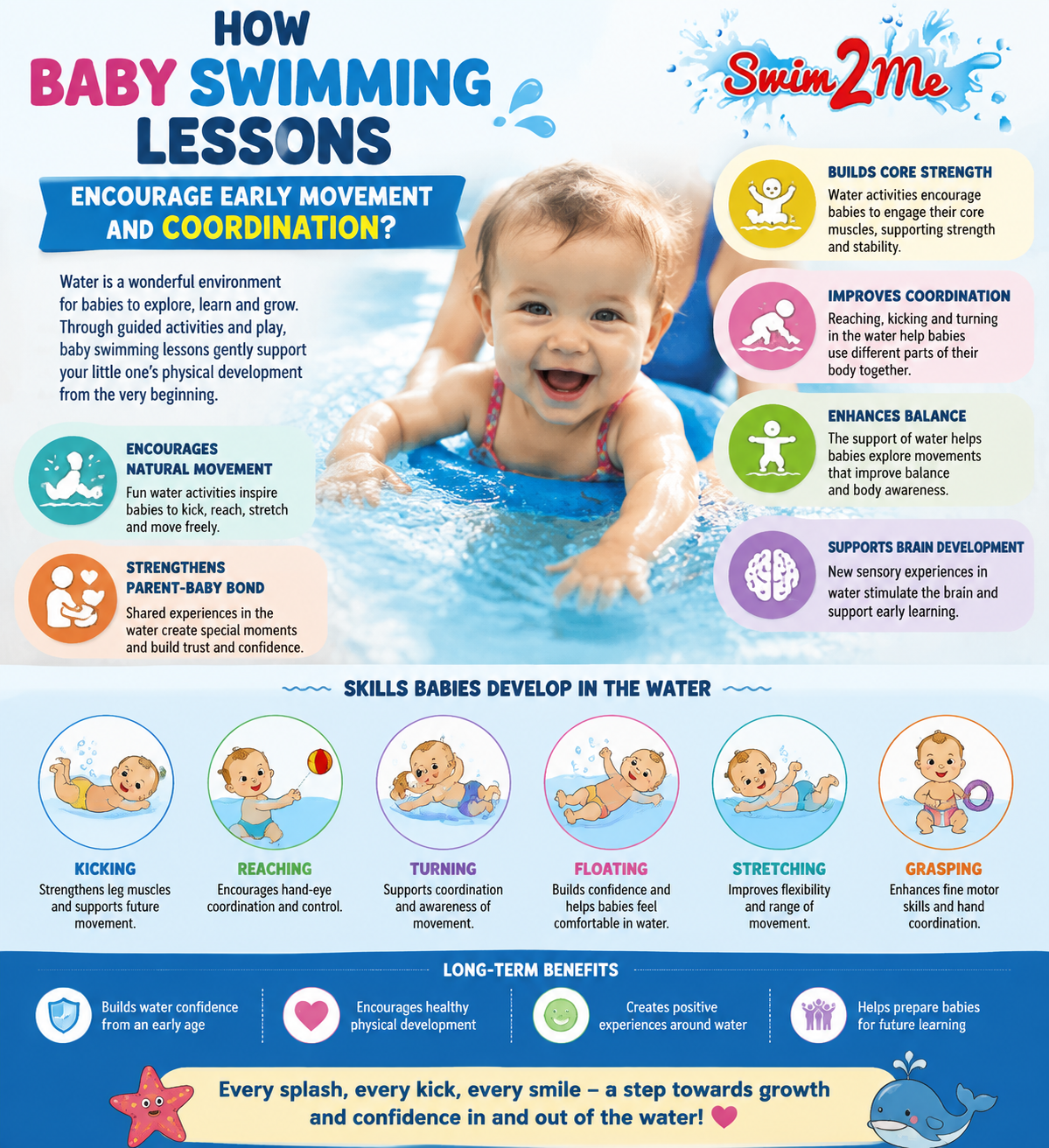
Water provides a unique environment where babies can move their arms and legs with less impact on their bodies. Supported activities in the pool can encourage babies to kick, reach, turn and move in different directions.
These simple movements can contribute to developing body awareness and coordination. Regular, age-appropriate aquatic activities may also help babies become more comfortable using their bodies in new ways.
How Do Baby Swimming Lessons Support Coordination?
Coordination involves using different parts of the body together to perform movements. Baby swimming activities can encourage this through playful exercises that involve reaching for objects, kicking the legs or responding to a parent or instructor.
For example, a baby may be encouraged to reach towards a colourful floating toy while being securely supported. Activities like these can introduce concepts such as direction, balance and controlled movement in a fun setting.
Can Water Activities Help Develop Balance and Body Awareness?
Yes. Water provides gentle resistance and buoyancy, creating a different sensory experience from movement on land. Babies can gradually become aware of how their bodies move and respond to the water.
During structured lessons, instructors can introduce supported floating, gentle turning and kicking activities appropriate to the child’s developmental stage. These experiences can help babies explore movement while remaining supported by a parent or qualified instructor.
Why Is Parent Participation Important?
Parent participation can make swimming lessons more comfortable and enjoyable for babies. Familiar voices, touch and encouragement can help create a positive environment while parents learn how to safely support their child in the water.
Parents can also continue age-appropriate movement activities outside lessons, helping reinforce familiarity with water and movement.
How Can Private Swimming Lessons Support Individual Learning?
Every baby develops at their own pace. Private swimming lessons in Hinchinbrook can provide a more personalised learning environment where instruction can be adapted to a child’s comfort level and developmental needs.
Individual attention may also allow parents to receive guidance on safe handling, positioning and appropriate aquatic activities. A supportive instructor can adjust activities according to the child’s responses rather than following a one-size-fits-all approach.
What Other Benefits Can Baby Swimming Lessons Offer?
Alongside movement and coordination, structured swimming experiences may help babies become more comfortable around water. Sessions can also provide opportunities for parent-child bonding, sensory exploration and positive early experiences with aquatic environments.
It is important to remember that baby swimming lessons are not a substitute for active adult supervision or water safety. Babies should always be closely supervised around water.
Baby swimming lessons can provide an enjoyable environment for introducing infants to movement, coordination and water familiarity. Through gentle, age-appropriate activities, babies can explore kicking, reaching, balancing and other movements while supported by parents and instructors. Whether you are exploring baby swimming lessons in Austral or considering Private swimming lessons in Hinchinbrook, choosing an experienced provider can help create a positive and supportive introduction to the water.
Make An Appointment Today
Ready to introduce your little one to a fun and supportive aquatic experience? Contact Swim 2 Me today to explore suitable baby swimming lessons for your family.
Call us at 0409 241 712 or email us at info@swim2me.com.au for more information.
Can swimming lessons improve a baby’s coordination?
Swimming activities can encourage coordination by involving different body movements together. Simple exercises such as kicking, reaching for floating toys and supported movement can help babies develop greater awareness of how their bodies move.
At what age can babies start swimming lessons?
The appropriate starting age depends on the baby's development, health and the swimming programme. Parents should choose an age-appropriate class and discuss any concerns with their healthcare professional before beginning lessons.
Are baby swimming lessons suitable for beginners?
Yes. Baby swimming lessons are generally designed to introduce babies gradually to water and movement. Instructors can use gentle activities and parental support to help babies become comfortable with the aquatic environment.
How can baby swimming lessons in Austral support early development?
Baby swimming lessons in Austral can provide babies with opportunities to explore movement, balance and coordination through structured, playful activities. Parent participation can also create a positive and reassuring learning environment.
Can swimming lessons help babies develop balance?
Water provides buoyancy and gentle resistance, creating a different environment for movement. Supported floating, kicking and turning activities can encourage babies to become more aware of their body position and movement.
What role do parents play during baby swimming lessons?
Parents often participate directly by holding and supporting their baby during activities. Familiar touch, voices and encouragement can help babies feel comfortable while parents learn appropriate ways to support their child safely in the water.
Are private swimming lessons suitable for babies?
Private swimming lessons in Hinchinbrook may be suitable for families seeking more individualised instruction. One-on-one attention can allow activities to be adapted to the baby's comfort level, developmental stage and learning needs.
Do baby swimming lessons teach water safety?
Baby swimming lessons can introduce age-appropriate water familiarisation and safety concepts. However, lessons do not make babies water-safe or eliminate the need for supervision. Babies must always be closely and actively supervised around water.
What are the benefits of baby swimming lessons?
Baby swimming lessons can provide opportunities for movement, coordination, sensory exploration and positive water experiences. They can also encourage parent-child interaction and help babies become more comfortable with aquatic environments under appropriate supervision.
